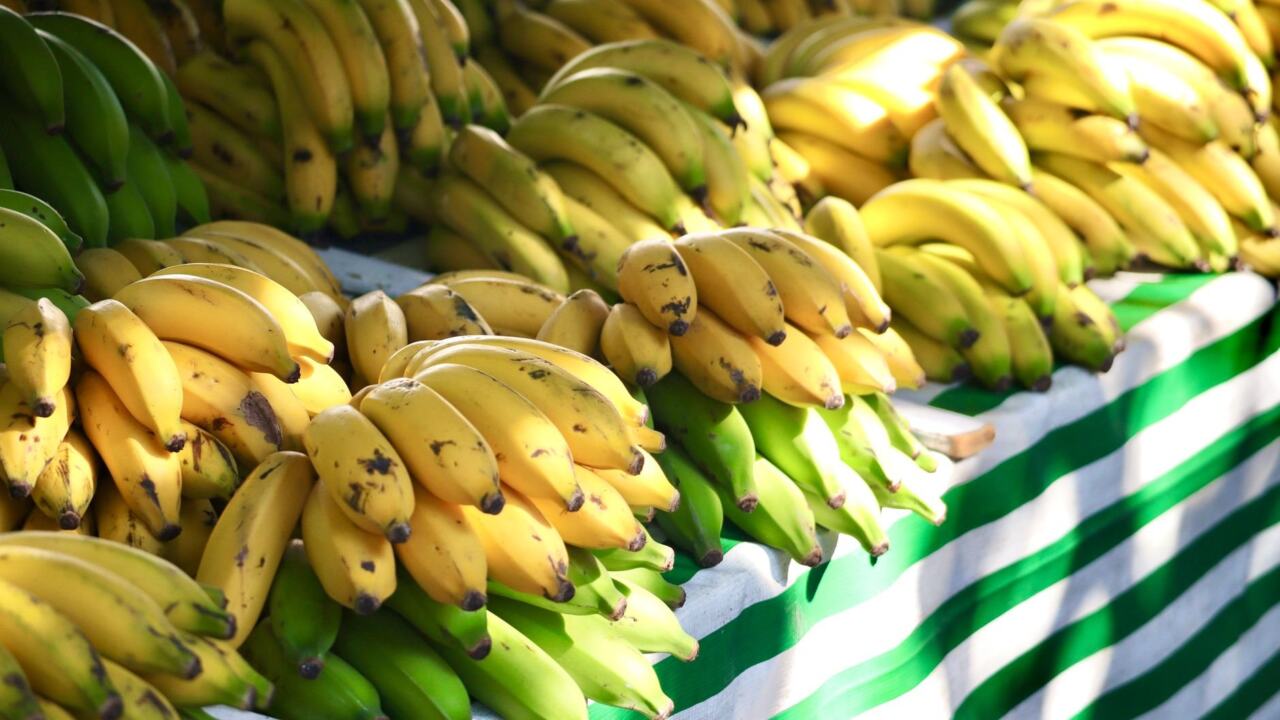
Do bananas cause constipation? Usually not. Ripe bananas supply fiber that supports regularity, while green, unripe bananas contain starch and tannins that may worsen constipation that is already present. Ripeness and overall fiber intake decide the effect.
The sections below separate the ripeness effect from the fiber effect. Bananas sit within the wider set of foods that help constipation, and they work best as one contributor among several.
How fiber changes stool
Fiber works by adding bulk and speeding movement. A review of pediatric constipation in PubMed Central states that fiber increases stool bulk and accelerates colon transit, and that higher intake of fruit, legumes and vegetables is associated with a lower incidence of constipation. Bananas fit that pattern as a fruit that supplies fiber, so the question is how much fiber they add and in what form.
Baptist Health reports that a medium banana provides approximately 3.07 g of dietary fiber. HealthPartners rounds this to 3 g in a medium banana of 7-8 inches. That is a modest amount, which is why a banana helps as part of a day’s eating rather than as a standalone fix.
Two fiber types drive most of the banana debate: resistant starch and pectin. The same PubMed Central review groups resistant starch, pectin and inulin as soluble, highly fermentable fiber, and lists pectin separately as a water-soluble fiber. Because the two sit in the same broad family, the difference between a green and a ripe banana comes down to what the fruit holds at each stage and how the gut responds to it.
Ripe versus unripe bananas
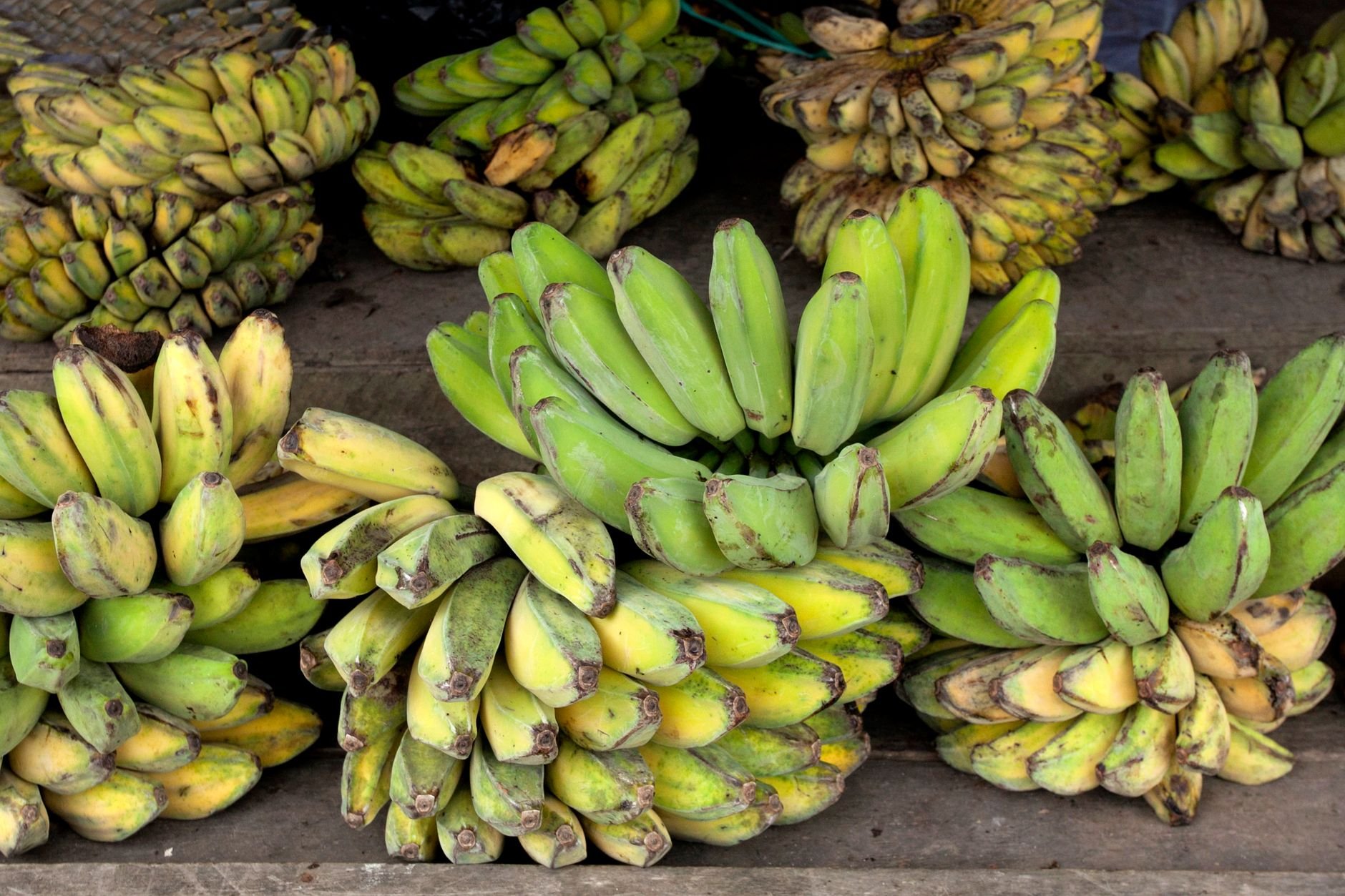
Ripeness is the clearest variable in the banana question. Ripe bananas suit someone who is constipated now, and green bananas suit someone who wants a firmer stool.
Green bananas and resistant starch
Everyday Health reports that unripe, green bananas have high levels of resistant starch, which can be very binding and cause constipation. HealthPartners adds that unripe bananas contain high amounts of tannins and starch, which can cause or aggravate existing constipation. The same binding effect explains why Everyday Health notes that unripe bananas can be used to treat diarrhea.
The practical reading is simple. If stools are already hard or infrequent, a very green banana is the wrong pick. If stools are loose, that same property becomes a reason to choose one.
Ripe bananas and soluble fiber
Baptist Health states that ripe bananas are richer in soluble fiber, which helps soften stool and promote regularity. A yellow banana with brown spots is therefore the better choice when the goal is constipation relief. Resistant starch also counts as a soluble fiber in the pediatric review cited above, so the source-by-source picture is not perfectly tidy. The consistent practical message across the banana-specific sources is to favor ripe fruit when constipated.
Why some people feel bananas constipate them
Individual reports of constipation after eating bananas usually trace to one of two things: the fruit was unripe, or the rest of the diet was low in fiber. Everyday Health notes that it is unusual for any one specific food to cause constipation, which points to overall fiber intake as the larger driver.
The ripeness explanation covers the common case. Someone who eats a firm, greenish banana can take in more starch and tannins than a person eating a spotted one, and HealthPartners links those compounds to constipation. The overall-diet explanation covers the rest. A banana eaten alongside little other fruit, vegetables or legumes leaves total fiber low, and the PubMed Central review ties lower fiber intake from those foods to more constipation.
The takeaway is to check the banana’s ripeness first, then the whole day’s fiber, before blaming the fruit.
Banana compared with prunes and kiwi
Bananas, kiwifruit and prunes all appear together in the fruit list of the PubMed Central constipation review, which names bananas, persimmons, kiwifruit, plum and prune as fruits in the diet. The same review notes that apple, prune and pear juices are usually recommended for constipation. The three fruits differ in fiber per serving and in how they act, and the serving units in the table are not identical, so compare them as typical portions rather than equal weights.
| Fruit | Fiber in typical serving | Planning use |
|---|---|---|
| Banana | 3 g per medium banana | Convenient everyday fruit; choose ripe, spotted fruit when constipated. |
| Prunes | 3 g per 4 prunes | Matches a banana on fiber and adds a second mechanism through sorbitol, a naturally occurring sugar. |
| Kiwi | 5 g per 1 cup | Highest fiber of the three per typical serving; a good swap when a banana feels too mild. |
Figures are from HealthPartners, which also notes that prunes and prune juice contain sorbitol, a sugar with a mild laxative effect.
The comparison gives a clear order of use. Prunes are the stronger choice when a banana is not enough, because sorbitol adds an effect that fiber alone does not. Kiwi suits people who want more fiber from a fruit serving. A ripe banana is the easiest to eat daily and carries the least risk of an upset, as long as it is not green.

Portion guide for banana constipation relief
A banana is a useful contributor to the day’s fiber, not a fixed dose. No supplied source sets a number of bananas for constipation, so the sensible approach is to count banana fiber toward a daily target and fill the rest with other foods.
Daily targets give the frame. The Academy of Nutrition and Dietetics recommends, as reported by Everyday Health, 25 g of fiber per day for women and 38 g per day for men. HealthPartners gives a broader range, stating that most adults should typically consume between 22 and 34 g of fiber per day. Against either target, a medium banana at about 3 g is a modest share.
- Choose by ripeness. Yellow fruit with brown spots gives the soluble fiber that softens stool; very green fruit is the stage to avoid while constipated.
- Use the banana as a building block. Pair it with other fruit, legumes and vegetables, the foods the PubMed Central review links to lower constipation incidence.
- Swap in prunes or kiwi for variety. They bring a different fiber or sorbitol profile, as the comparison above shows.
Pairing bananas with other fiber foods
Fiber from several foods adds up faster than fiber from one fruit. Because the PubMed Central review ties lower constipation incidence to fruit, legumes and vegetables together, the banana works best inside a meal built from a mix of plant foods rather than eaten alone.
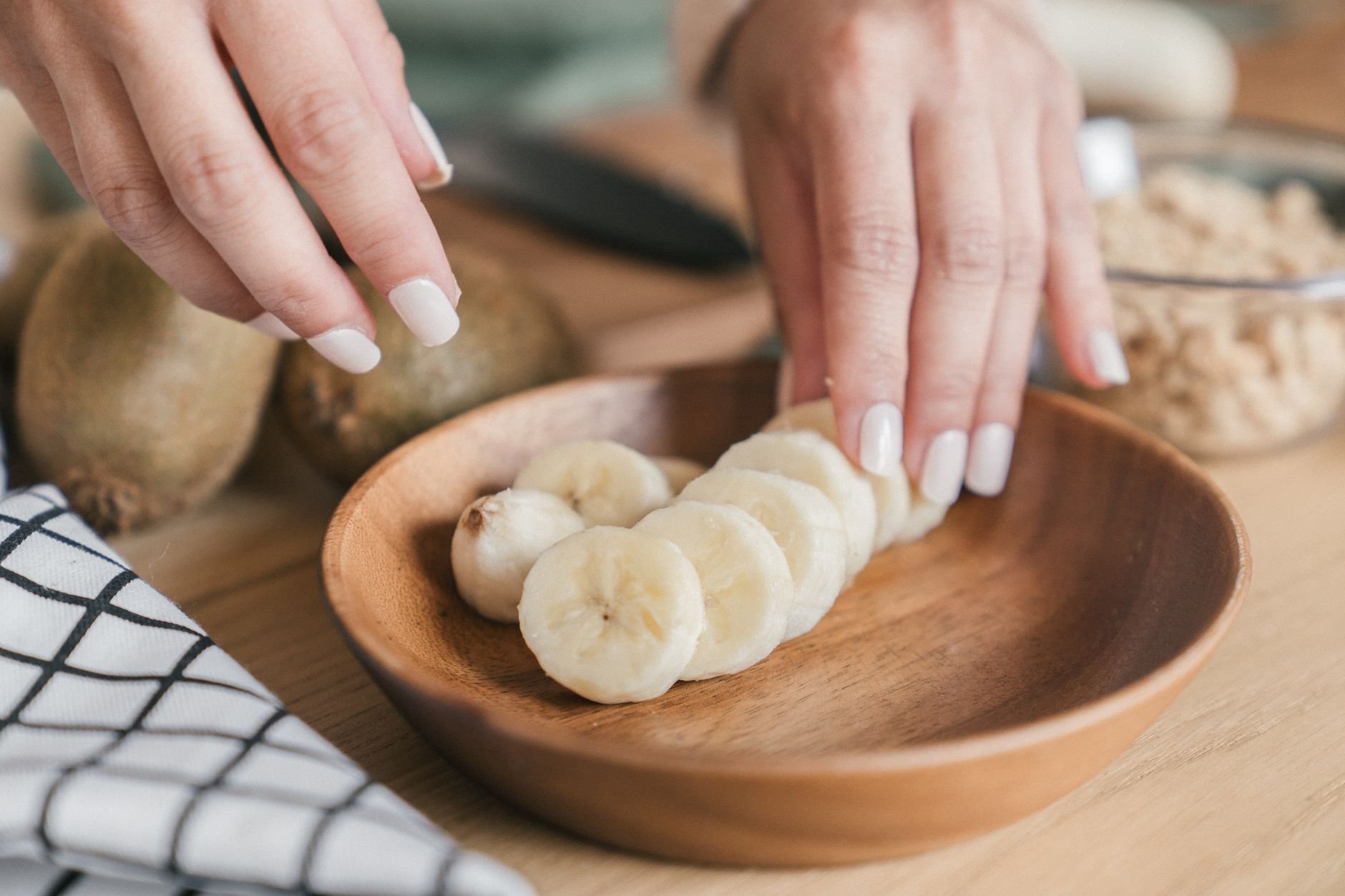
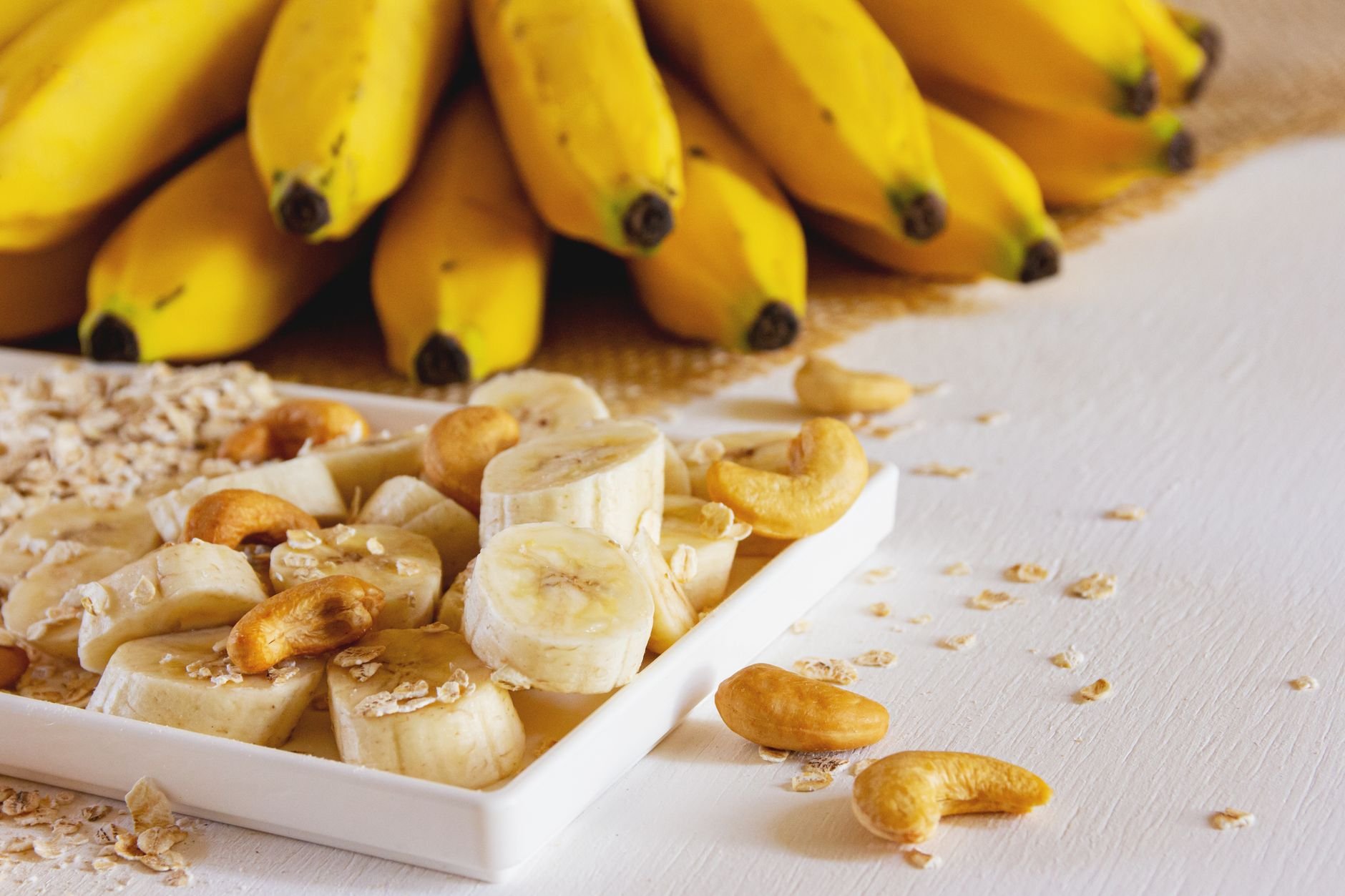
Sliced over a bowl of oatmeal, a ripe banana turns a simple breakfast into a plant-based meal and keeps the fruit at the stage associated with soluble fiber. Fruit bowls that combine banana with kiwi spread the fiber across two foods, and prunes can be added on days when stools are slow.
When a banana is not enough
If constipation continues after a few days of ripe bananas and other fiber-rich foods, the banana is not the lever that matters. Diet is only one factor, and constipation that persists despite dietary changes is worth raising with a doctor.
Other everyday foods and drinks raise the same worry. Readers weighing other suspects can compare the evidence on does alcohol cause constipation and does rice cause constipation, which follow the same food-by-food approach used here.
Frequently asked questions
Is there research showing bananas relieve constipation?
Evidence on bananas specifically is limited. Baptist Health states that the research on bananas, ripe and unripe, and constipation is not definitive. The stronger evidence concerns fiber in general, and the pediatric constipation review in PubMed Central lists bananas among the fruits included in the diet.
How much fiber do children need?
For children over 1 year, the pediatric review expresses the daily recommendation as age plus 5-(10) g. Adult targets do not apply directly, so a child’s banana serving counts toward a lower total.
Are fiber supplements advised for children with constipation?
As of 2014, NASPGHAN and ESPGHAN, as described in the PubMed Central review, did not support the use of fiber supplements in the treatment of functional constipation. Food-based fiber, including fruit, is the route the review describes.