Eating plenty of fiber but still stuck? The best high fiber foods for constipation are legumes, bran cereal, whole grains, raspberries, pears and cooked vegetables. Add them gradually and drink enough fluid alongside them.
This overview ranks foods by fiber per serving and by meal. For the wider picture beyond fiber, see our guide to foods that help constipation.
How much fiber to aim for
Most adults need roughly 25 to 35 grams of dietary fiber a day, and the right figure within that range depends on sex and calorie intake. The University of Wisconsin-Madison University Health Services says adults age 18 and over need 25-35 grams dietary fiber per day.
Daily targets by sex and calories
Memorial Sloan Kettering gives about 25 grams a day for females and about 35 grams for males. The Academy of Nutrition and Dietetics frames it per calorie instead: 14 grams for every 1,000 calories, which works out to about 25 grams for women and 31 grams for men.
If you currently eat little fiber, treat the lower end of your range as the first goal. Going well beyond recommended amounts offers no proven added benefit, so the top of a range is not a target to chase.
What the two fiber types do for stool
Dietary fiber helps constipation in two complementary ways. Insoluble fiber adds bulk to the stool, which is the main reason stool bulk rises when you eat more vegetables, whole grains and wheat bran. Soluble fiber attracts water and turns into a gel, which makes stool softer. It is found in oat bran, barley, nuts, seeds, beans, lentils, peas, apples and pears. The Academy adds that fiber may also speed up the transit of stool through the digestive system.
Because most whole plant foods contain both types, you do not need to track them separately. Choose a mix, and let the gram figures below guide which items to lean on.
Highest-fiber foods by serving
Legumes, bran cereal, raspberries and almonds sit at the top of the gram ranking, while cooked oatmeal and broccoli sit in the useful middle. The table lists common foods from highest to lowest fiber per serving and says where each fits in the day.
| Food and serving | Fiber per serving | Planning use |
|---|---|---|
| Lentils, cooked, ½ cup | 7 or more grams | Lunch or dinner base for soups, salads and grain bowls |
| Black beans, cooked, ½ cup | 7 or more grams | Dinner side or filling for wraps and bowls |
| All Bran cereal, ½ cup | 7 or more grams | Breakfast, or a topping over other cereals |
| Raspberries, fresh, 1 cup | 7 or more grams | Breakfast topping or dessert fruit |
| Almonds, whole, ½ cup | 7 or more grams | Snack; keep portions modest because the serving is dense |
| Pears with skin, 1 cup | 6-7 grams | Snack or breakfast fruit; leave the skin on |
| Oatmeal, cooked, 1 cup | 3-4 grams | Gentle everyday breakfast base |
| Broccoli, cooked, ½ cup | 3 grams | Dinner vegetable that adds fiber at low effort |
Figures come from the Memorial Sloan Kettering high fiber foods chart.
Legumes and whole grains for the main meals
Legumes give the most fiber for the least effort, and a half cup of cooked lentils or black beans already reaches the top band in the chart. Whole grains are the steady backbone. The Academy lists brown rice, whole grain bread and rolls, and bran cereals among them. On a food label, look for items it describes as high fiber, meaning 20% or more of the daily value per serving.
This suits you if your meals are built around refined bread, white rice or pasta. Swapping those staples changes your fiber intake across the whole day, and does not require you to add new dishes.

Fruit and vegetables
Produce adds fiber and variety, but the amount differs sharply between items. Raspberries and pears with skin lead among the fruit, and cooked broccoli is a solid vegetable choice. Peeling and juicing are the habits that undo the benefit, because peeling or juicing fruits or vegetables does decrease the fiber.
Fruit: raspberries and pears
Fresh raspberries are one of the few fruits that match beans and bran per serving in the chart above. Pears with skin come close, and the soluble fiber in pears and apples helps soften stool. Choose whole fruit over juice, and keep the skins on.
For a longer ranking of individual fruits, our page on the best fruit for constipation goes through them one by one.
Vegetables and how you prepare them
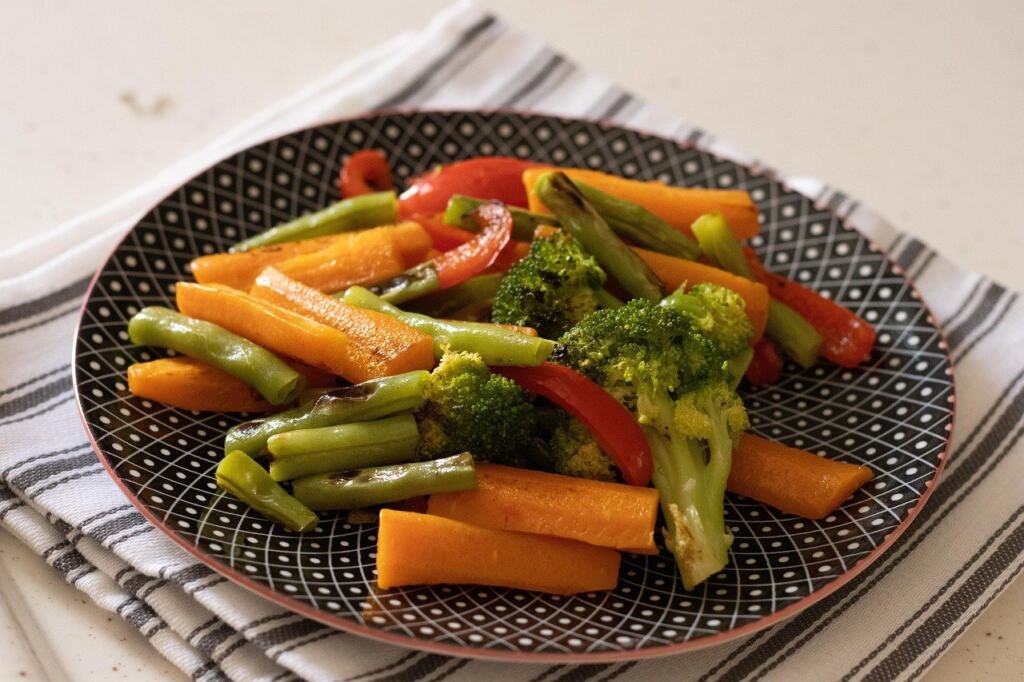
Vegetables are a main source of insoluble fiber, and cooking them does not remove it. Steaming or roasting broccoli, and cooking carrots and peas until tender, makes larger portions easier to eat, and the fiber stays in the food. Peeling is the step to skip when the skin is edible.
If vegetables are the only change you make, expect a smaller effect than from adding legumes or bran. Combine them with the foods in the table rather than relying on salad alone.
Breakfast options
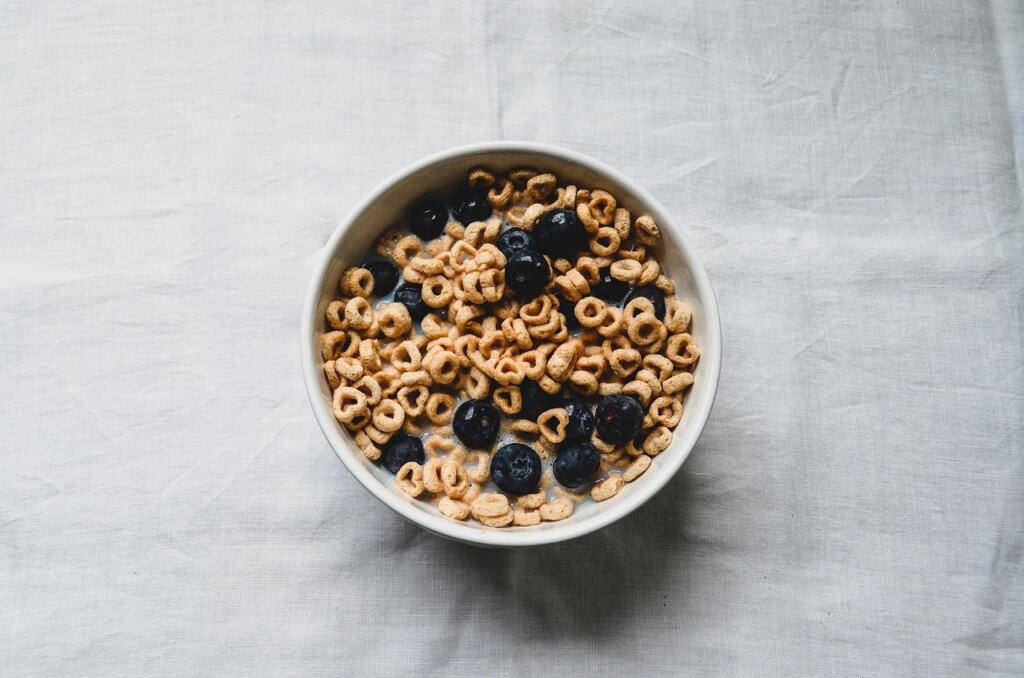
A high fiber breakfast for constipation can be as simple as bran cereal or oatmeal topped with berries. According to the same chart, ½ cup of All Bran provides 7 or more grams, while 1 cup of cooked oatmeal provides 3-4 grams. Bran cereal is the stronger choice for a quick, concentrated start. Oatmeal is gentler if you are raising fiber from a low base.
If you do not want a full bowl of bran, add a small amount to what you already eat. University Health Services suggests 100% bran cereal, ground flaxseed or wheat germ, 1 to 3 tablespoons a day. Stir it into yogurt, oatmeal or a smoothie, then top with raspberries or sliced pear.
Snacks that add fiber between meals
The most dependable high fiber snacks are nuts, seeds, apples and pears, all named as soluble fiber sources. Whole almonds rank with the top foods in the chart, so a small handful is a practical mid-afternoon choice. Pair them with a sliced apple or pear, and leave the peel on, since peeling lowers fiber.

Raw vegetable sticks also count toward insoluble fiber. They suit people who want something light, while almonds and fruit suit those who need the snack to hold them until dinner.
It also helps to know what may be working against your efforts. Our list of foods that cause constipation covers items worth cutting back while you add fiber.
Raising fiber without bloating or a worse stall
Add fiber slowly and keep fluids up. A fast jump can cause gas and bloating, and fiber without enough fluid can make constipation worse.
How fast to increase intake
The Academy advises increasing your intake slowly across five days, and the suggested pace is no more than 5 grams more each day. University Health Services gives the reason: increase slowly to avoid bloating or gas. Harvard Health adds two practical habits: spread fiber across the day and favor whole foods over supplements.
- If you eat little fiber now: change one meal first, such as breakfast, and add legumes or bran later in the week.
- If you already eat a fair amount: swap refined staples for whole grains before adding anything new.
- If gas or bloating appears: hold at your current level for a few days before the next increase.
Do you need more water with fiber?
Yes. The Academy warns that without enough fluids, high fiber foods may increase your risk of constipation. University Health Services recommends 64-90 ounces (2-3 liters) of fluids a day. Water counts, and so do other fluids. Raise fluids at the same time as fiber and not afterward, since soluble fiber needs water to form its softening gel.
When food changes are not enough
Food changes suit everyday constipation, but they have limits. University Health Services advises calling your provider if constipation does not go away. If you have raised fiber and fluids gradually and see no improvement, a clinician can check for other causes and suggest next steps. This page is general food guidance, not personal medical advice.
Frequently asked questions
| Question | Answer |
|---|---|
| How is constipation defined? | The Academy says a healthcare provider might diagnose it when you have fewer than three bowel movements a week. |
| Does cooking remove fiber from vegetables? | No. Cooking keeps the fiber, while peeling or juicing reduces it. |
| Is more fiber always better? | No. Harvard Health notes that going well beyond recommended amounts offers no proven added benefit. |
| Should fiber come from food or supplements? | Harvard Health recommends favoring whole foods over supplements, and spreading fiber across the day. |