Cooking healthy dinner recipes for two usually means shrinking a recipe written for a bigger household. Scale the main ingredients, keep liquids and oil in check, check doneness early, and plan leftovers so nothing is binned.
This guide sits alongside our wider collection of easy healthy dinner recipes. It deals with the problems that appear when the number of eaters drops: scaling a recipe, choosing dishes that suit two plates, and using what is left.
Scaling a recipe down for two
Most online recipes are scaled for a family of four or more, so a dinner for two usually needs adjusting before you start. The main ingredients shrink easily. Liquids, oil and seasoning need more judgement.
What to reduce and what to keep
- Proteins, vegetables and grains: reduce these in proportion to the number of eaters. They make up the bulk of the dish, so they are where a smaller batch saves you money and effort.
- Broth, water and sauté oil: these are the usual exceptions to the halving rule, so do not cut them automatically. A smaller amount of food still needs enough liquid or fat to cook properly.
- Spices: add slightly less than the recipe calls for, then adjust to taste. It is easier to add more at the end than to rescue an over-seasoned small pot.
Pan size and timing
Move to a smaller skillet, saucepan or baking tray so the reduced quantity still fills the pan as the original recipe intended. A smaller batch may also finish sooner. Food Revolution advises that cooking times may be less and suggests checking for doneness about 75% of the way through the original time. Treat the recipe’s stated time as a ceiling and start checking before it.
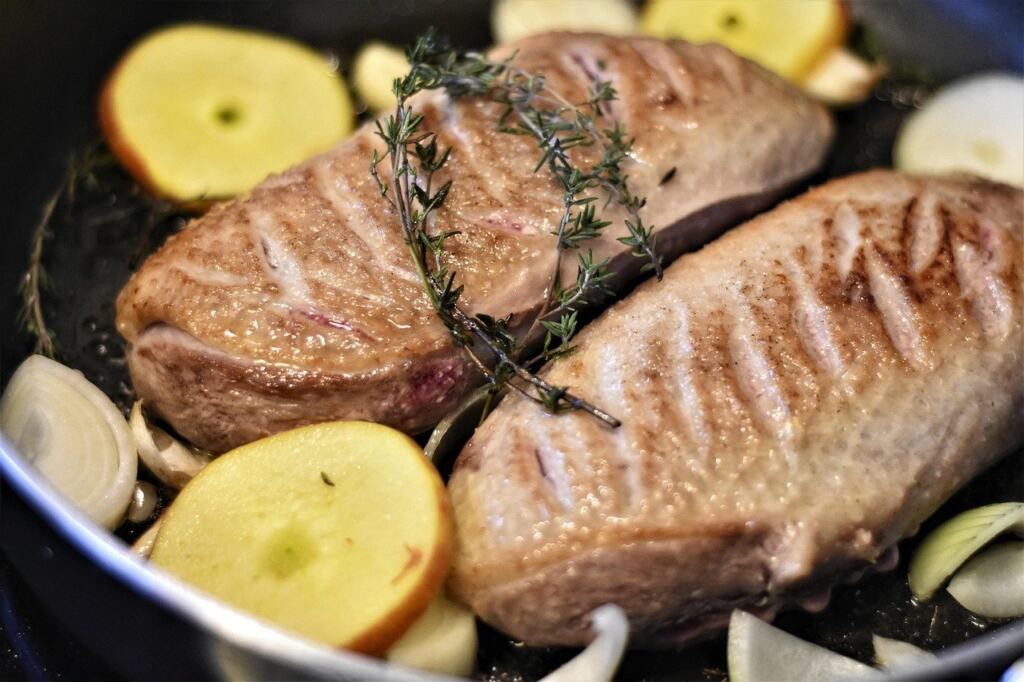
Healthy dinners that suit two people
The best dinners for two have clear individual portions, a short ingredient list and a method you can repeat on a busy night. Three formats cover most weeknights: one-pan dinners, fish and seafood, and bowls or stews.
Skillet and sheet pan dinners
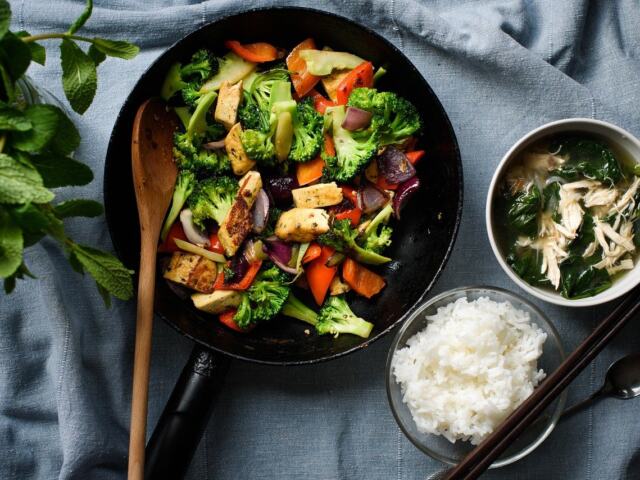
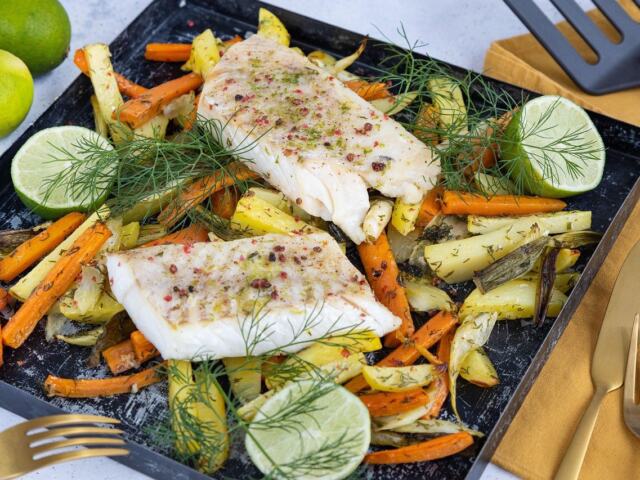
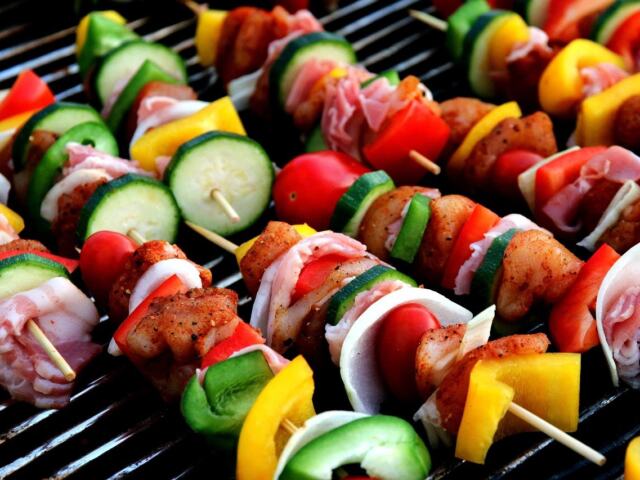
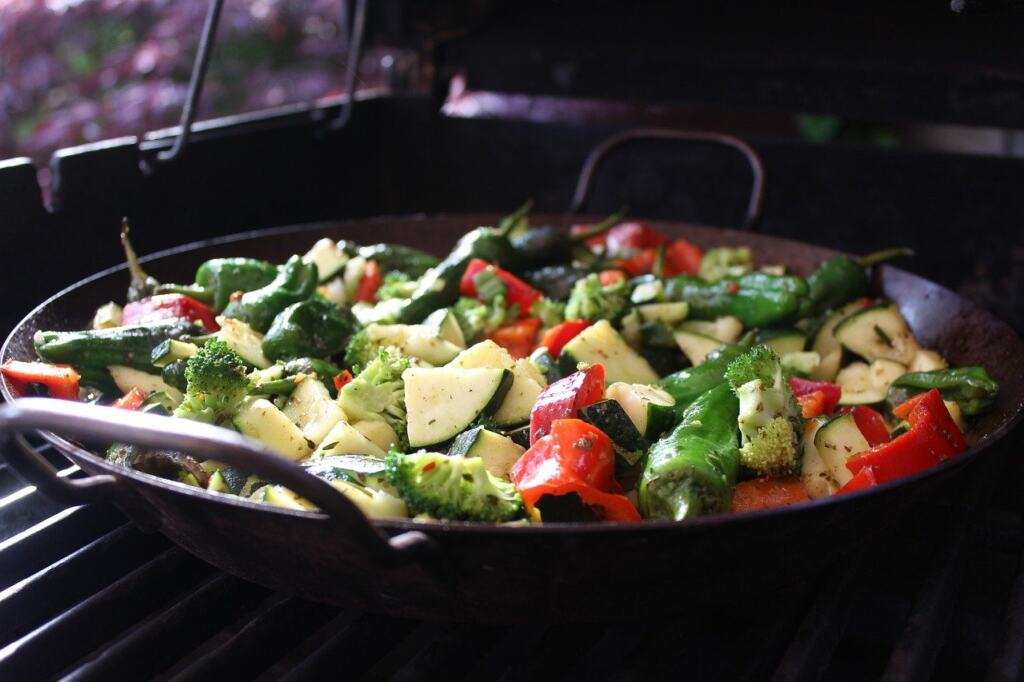
Sheet pan cooking puts a protein and vegetables on one tray, and a skillet does the same on the hob. Both suit nights when you want few pots and little attention. Choose a tray or pan sized for two portions rather than the largest one you own, and cut vegetables to a similar size so they finish together.
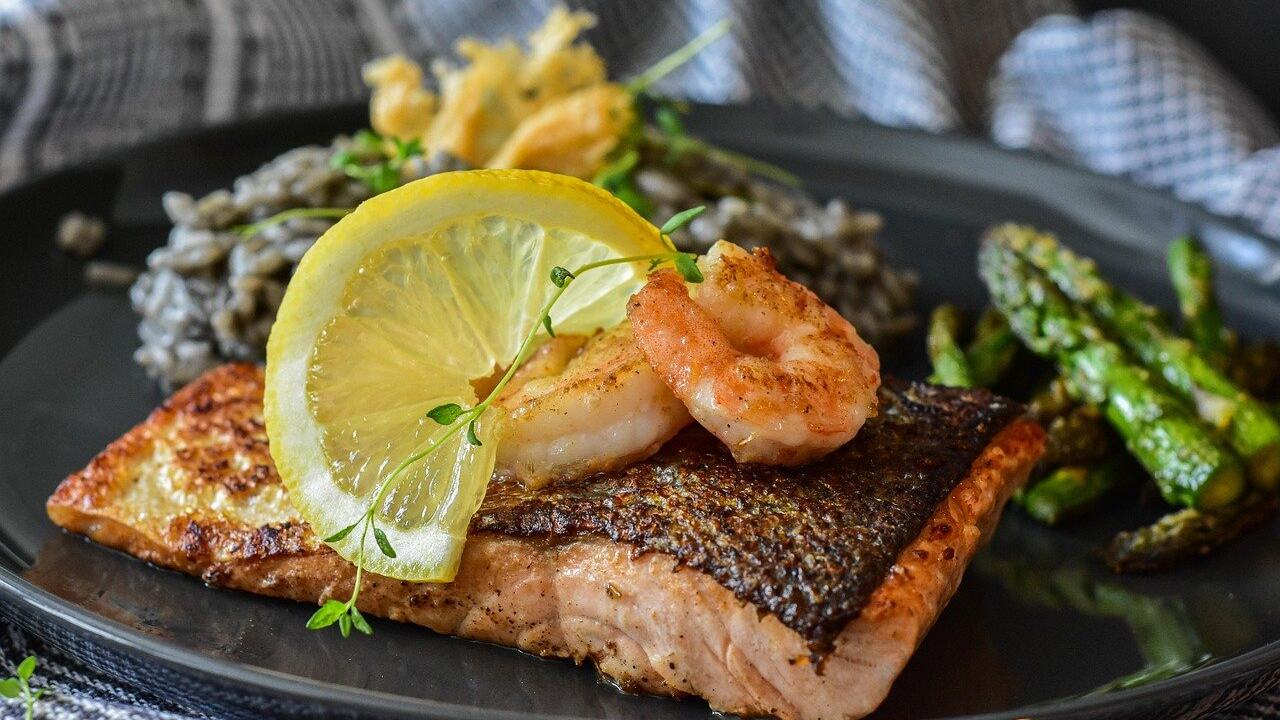
Salmon and other quick fish dinners
Salmon fillets are naturally portioned, which makes them an easy fit when you are cooking for two. Pair them with a green vegetable such as asparagus and a grain. For seafood, Taste of Home lists a firecracker shrimp dinner at about 10 shrimp per serving: 326 calories and 13g fat. The same collection says its 30-minute healthy dinners come in at fewer than 550 calories per serving, which is a useful ceiling for judging quick recipes, not a target to aim for.
Bowls and chili
Bowls suit people who like to assemble their own plate. Food Revolution describes its Banh Mi Bowl as coming together in about 30 minutes. A stew-style recipe suits a different night: its Hearty Pumpkin Chili is designed to serve four, so cooking it for two gives you a second dinner rather than a pot you have to shrink. Choose this route when you would rather cook once and reheat.
To check that any of these dinners is balanced, use Harvard’s Healthy Eating Plate. The School of Public Health describes it as a helpful menu planning guide.
Healthy dinner for one without a separate recipe
The simplest dinner for one is a dinner for two with one portion saved. Cook the full recipe, eat one serving and store the other for a later night. Food Revolution suggests a fiesta salad bowl as a meal to enjoy as a solo meal, with leftovers even better. Bowls like this keep your options open, and our healthy dinner salad recipes give more ideas for one-person plates.
This approach also helps with portion size. Harvard’s Nutrition Source notes that preparing food yourself means you decide the ingredients and portions served. Divide the portions into containers when you cook rather than at the table, so the second serving is already set aside.
Setting a table for two
A romantic healthy dinner is mostly a matter of choosing a dish with little last-minute work, so you are at the table rather than at the hob. Seared or baked salmon with asparagus suits this well, because each plate is its own fillet and the side is simple. Keep the menu to one main and one or two sides, and finish the shopping and prep earlier in the day.
Using leftovers so nothing goes to waste
Cooking for two wastes food when leftovers sit unplanned. Harvard’s Nutrition Source says meal prep saves time and money when you prepare just enough for what is needed the following week. The refrigerator windows below show how quickly each type of dish needs a plan.
| Leftover | Refrigerator at 40 °F or lower | Planning use |
|---|---|---|
| Cooked ground poultry or ground beef | 1-2 days | Shortest window, so plan it for the next night only. |
| Cooked whole meats, fish and poultry, including salmon | 3-4 days | Suits a second dinner or lunches within the same few days. |
| Soups and stews | 3-4 days | Eat within the window or move the extra portion to the freezer. |
| Cooked beans | 5 days | The longest-keeping base for bowls later in the week. |
These storage times come from Harvard’s Nutrition Source guidance on meal prep.
If you will not eat a dish within its window, freeze it rather than leaving it to the last day. Soups, stews and cooked beans can go in the freezer, and cooked meals in general tend to freeze well in airtight containers.
- Cooked for two, eating one tonight: portion the second serving into a container straight away, so it is chilled promptly and ready to reheat.
- Fish or poultry, no plan for the next few days: turn it into a bowl or salad base within its window, rather than cooking a fresh protein.
- Ground meat dish: schedule it for the following night, since its window is the shortest.
Planning a week of dinners for two
A weekly plan for two works best when it starts small and shares ingredients between meals. Harvard’s Nutrition Source suggests aiming to create enough dinners for 2-3 days of the week rather than the whole week at once. That keeps the plan realistic and keeps the fridge from filling with food that will not be eaten.
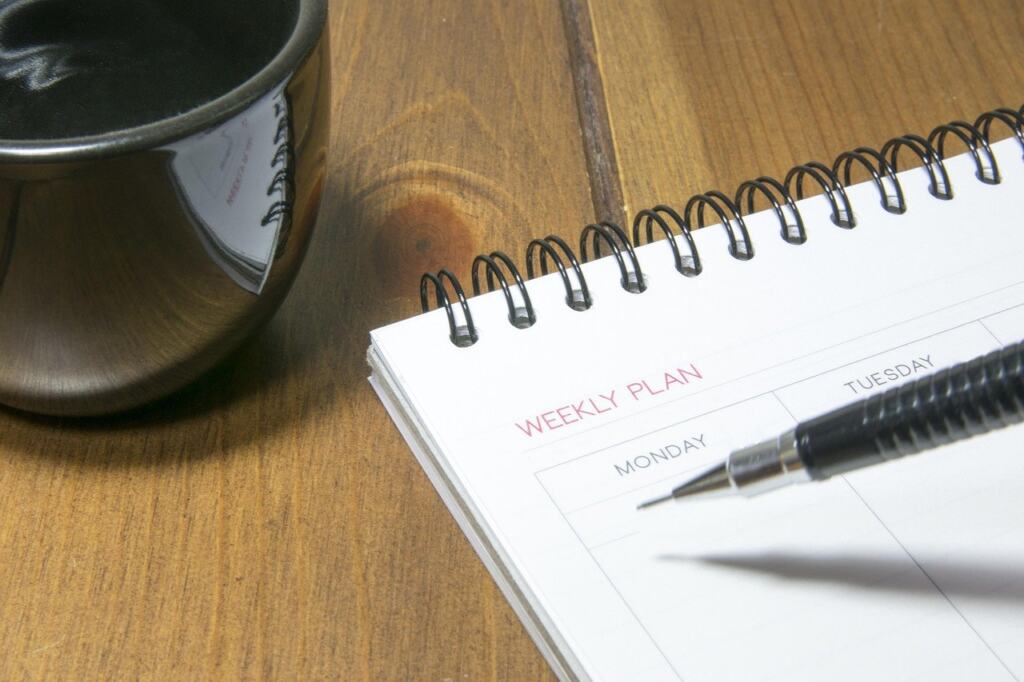
- Choose one planning day. Harvard recommends using a specific day each week to plan the menu, shop and prep.
- Sit down together. Food Revolution notes that picking weekly recipes with your partner saves time and money and reduces food waste.
- Pick recipes that overlap. Choose dishes that share some of the same ingredients, so you can buy and cook them in bulk and divide them.
- Batch cook a base. Quinoa or beans cooked once can be kept refrigerated in a food storage container for the week.
- Start with the longest-cooking protein. Harvard names chicken and fish as the foods that take longest, so cook those first on prep day.
If budget is the main pressure on your plan, our healthy cheap dinner recipes pair well with this method, because cooking just enough is where the savings come from.
Frequently asked questions
| Question | Answer |
|---|---|
| How long can soup or stew stay in the freezer? | Harvard’s Nutrition Source gives 2-3 months at 0 °F or lower for soups and stews, and the same range for cooked beans. |
| Which foods are poor candidates for freezing? | Foods with high moisture content, such as salad greens, tomatoes and watermelon, are not recommended for freezing, according to Harvard’s Nutrition Source. Keep these fresh and add them when you serve. |
| How do I keep track of what to eat first? | Label every prepped item with a date, and rotate stored food so the oldest meals sit at the front, as Harvard’s meal prep guidance recommends. |