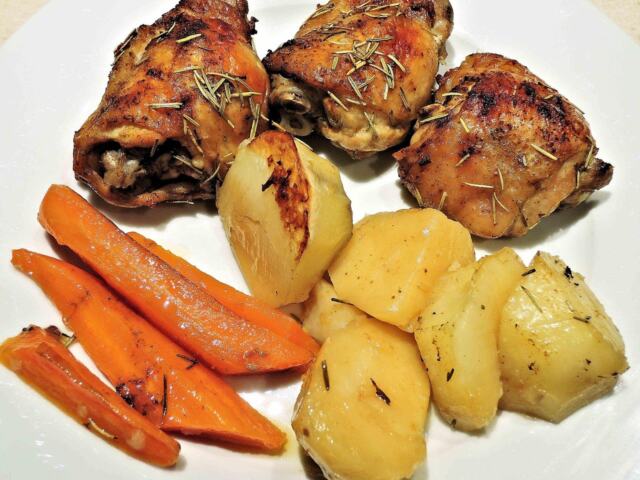

What are FODMAPs? The name stands for Fermentable Oligosaccharides, Disaccharides, Monosaccharides And Polyols, a set of short-chain carbohydrates in everyday foods such as onion, garlic, lentils, milk and wheat. They cause gas and bloating mainly in people with sensitive guts.
This page defines the term and explains the mechanism rather than teaching the diet. If you want meals built around the idea, start with low fodmap recipes for ibs.
What the name stands for and who coined it
FODMAP stands for “Fermentable Oligosaccharides, Disaccharides, Monosaccharides, And Polyols”, as Monash University’s account of the discovery spells out. The first word matters most for symptoms: these carbohydrates are fermentable, so bacteria in the gut can break them down and produce gas. The other four words name the carbohydrate groups covered below.
The concept comes from Monash University in Australia. The same Monash account describes early evidence that restricting lactose, fructose, polyols, fructans and GOS improved IBS symptoms. Stanford Health Care likewise credits Monash researchers with creating the low FODMAP diet. The term names a category of carbohydrates, and the diet is one way of applying it.
Those carbohydrates sort into four groups, and each one turns up in an ordinary kitchen.
The four FODMAP groups in food you already own
The groups differ in chemistry, but you will find all of them in a normal pantry, fridge or fruit bowl. The table contrasts them side by side before the sections that follow look at each.
| Group | Fermentable carbohydrate | Everyday foods | Planning use |
|---|---|---|---|
| Oligosaccharides | Fructans (inulin) and galactans (GOS) | Wheat, onion, garlic; beans, lentils and legumes such as soy | Savoury bases and staples are the usual place to meet them. |
| Disaccharides | Lactose | Dairy and breast milk | Relevant wherever milk-based products appear. |
| Monosaccharides | Fructose | Fruit, in certain quantities | Quantity matters as well as the name of the fruit. |
| Polyols | Sorbitol, mannitol, xylitol, maltitol | Sweeteners; avocado, apricots, cherries, nectarines, peaches, plums | Read sweetener labels as well as checking the fruit bowl. |
Group names and food examples follow Cleveland Clinic and Stanford Health Care.
Oligosaccharides: onion, garlic, wheat and legumes
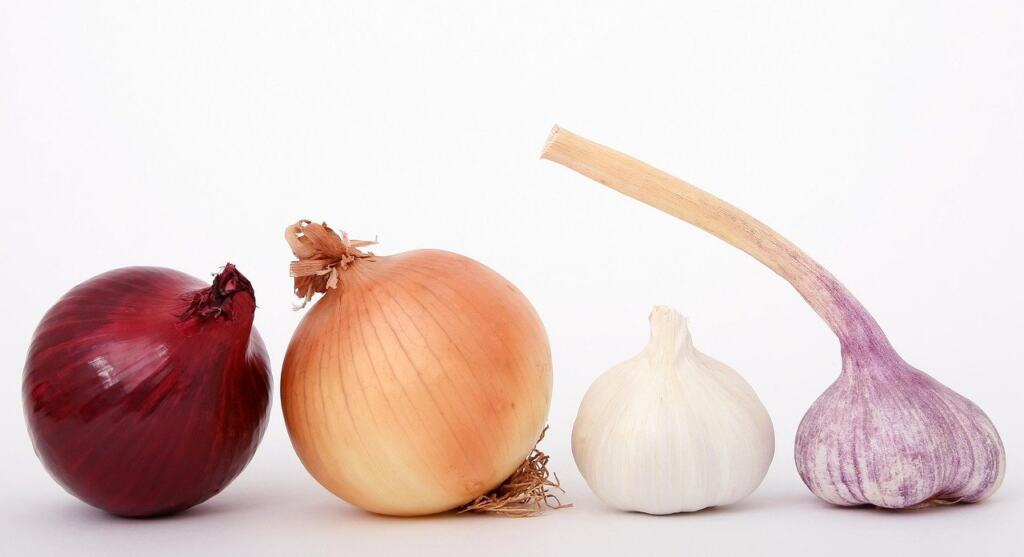
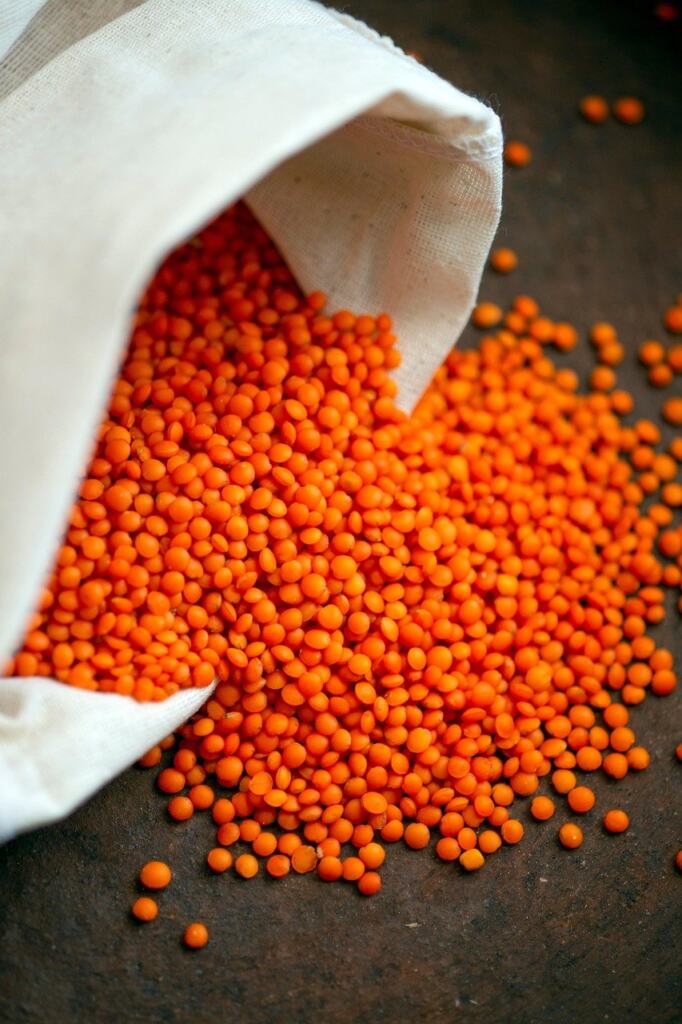
Oligosaccharides include onions, garlic, beans, lentils and many wheat products, according to Cleveland Clinic. The “oligo” in the name points to chains of sugar units. Those chains need to be broken down into single molecules before they can be absorbed through the small intestine, which is why this group sits at the centre of the story.
Stanford Health Care splits the group into two types. Fructans (inulin) are found in wheat, onion and garlic. Galactans are found in beans, lentils and legumes such as soy. A tin of lentils and a clove of garlic therefore belong to the same group even though they look nothing alike.
Disaccharides: lactose in milk
Lactose is the fermentable sugar in the disaccharide group. It is the sugar in dairy and breast milk, so a glass of milk or a milky dessert is the everyday example. Because milk is a drink as well as an ingredient, the low fodmap drinks guide is a natural next read.

Monosaccharides and polyols: fruit and sweeteners
Fructose, the sugar in fruit, is the fermentable monosaccharide. Cleveland Clinic ties it to fruit in certain quantities, so the amount eaten is part of the picture, not only the type of fruit.

Polyols are sugar alcohols, commonly used as artificial sweeteners. Stanford Health Care names sorbitol, mannitol, xylitol and maltitol, and lists stone fruits such as apricots, cherries, nectarines, peaches and plums, plus avocado, as natural sources. The same fruit bowl can therefore hold fructose and polyols at once.
For verdicts on individual foods, the low fodmap food list sorts them in one place. How these groups actually produce symptoms comes next.
Why FODMAPs cause gas and bloating
FODMAPs cause gas and bloating through a chain of linked steps that runs from the small intestine to the large intestine.
- Absorption stalls in the small intestine. Molecules in chains need to be broken down into single molecules to be absorbed, as Cleveland Clinic explains.
- Water follows. Monash University notes that FODMAPs are relatively small and attract water into the small intestine. Stanford Health Care describes them as osmotic, meaning they pull water into the intestinal tract.
- Bacteria ferment what remains. Fermentation by bacteria in the large intestine produces gases and fatty acids as byproducts. The additional gas and water stretch the bowel wall and trigger IBS symptoms, per Monash.
A peer-reviewed review in PubMed Central adds that symptoms are most likely due to stimulation of mechanoreceptors as a response to luminal distension. Bloating, in other words, is largely a stretch signal from the gut wall, not a sign that the food is toxic. The same plate of food passes without trouble for many people, which raises the question of who needs to pay attention.
Who actually needs to limit FODMAPs
No, not everyone needs to avoid FODMAPs. Cleveland Clinic notes that only some people with sensitive guts experience indigestion from these foods, and that the low-FODMAP diet is often prescribed for limited periods for people diagnosed with irritable bowel syndrome (IBS). Three common misunderstandings are worth clearing up.
- It is not a diet for everybody. The foods in each group are ordinary foods, and the problem described above is tied to sensitive guts, not to the carbohydrates themselves.
- It is not meant to be permanent. Cleveland Clinic says healthcare providers recommend at least two weeks and no more than six weeks for the elimination phase.
- It is not a guaranteed fix. Studies of the elimination phase have shown that 50% to 86% of patients have a clinically meaningful response, according to the PubMed Central review. That is a large share of patients, but not all of them.
For IBS specifically, Monash reports that guidelines recommend a trial of a FODMAP diet as a first or second-line therapy for managing the condition. A trial is the key word: the aim is to test whether symptoms respond, not to remove these foods for good.
Frequently asked questions
| Question | Answer |
|---|---|
| Are FODMAPs unhealthy? | Not inherently. Cleveland Clinic describes the oligosaccharides as soluble plant fibres known as prebiotics, which feed the beneficial bacteria in your gut. The trouble is limited to people whose guts react to them. |
| How can I check whether a specific food is high in FODMAPs? | The Monash app includes thousands of foods laboratory-tested by Monash for FODMAP content, and it rates them with a traffic light system, as described in Monash University’s overview. |
| Is the low-FODMAP diet risk-free? | No. The PubMed Central review notes that, as a restrictive diet, it carries risks of nutritional inadequacy and of fostering disordered eating. |