Standing at the stove with a recipe that starts with onion and garlic? Low FODMAP recipes for IBS swap those for garlic-infused oil, simple proteins and measured portions, and the strict version works best under a healthcare professional’s guidance.
This guide applies the diet at cooking level, one phase and one meal at a time. If you want the background first, read what are fodmaps, and keep the low fodmap food list open while you shop.
Choose your starting route
Readers arrive at this diet from different places, so there is no single correct first recipe. Pick the route that matches how you actually eat, then branch out once those meals feel routine.
- Starting the diet properly: arrange professional support before you cook anything. A strict low FODMAP diet should only be commenced under the supervision of a healthcare professional, and a dietitian can also tell you how long to stay in each phase.
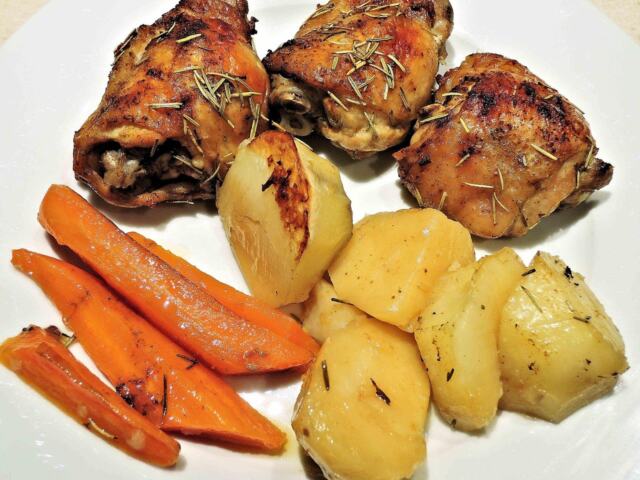
- Dinner is your problem meal: go straight to the low fodmap dinner recipes and the low fodmap chicken recipes. Dinners are where onion and garlic show up most, so they teach the swaps fastest.
- Mornings are rushed: try the low fodmap breakfast recipes. Eggs, lactose-free milk and measured fruit make the first meal of the day easy to standardise.
- You graze between meals: start with low fodmap snacks and low fodmap drinks, since unplanned snacks and drinks are an easy place for hidden ingredients to slip in.
- You like a plan: use the low fodmap meal plan for ibs, the low fodmap lunch ideas and low fodmap meal prep to cook once and eat several times.
Whichever route you take, the same cooking habits apply: short ingredient lists, a reliable flavour base that is not onion or garlic, and portions you can measure.
The three phases, applied in the kitchen
The low FODMAP diet is usually described as three phases, and a good recipe collection tells you which phase each dish suits. Some collections state that their dishes are suitable for all three phases of the low FODMAP diet, which makes them the safest place to build habits because you will not need to relearn your cooking later.
The diet itself has been described as an effective lifestyle treatment for many people with IBS. That is a statement about people in general, not a promise about your gut, which is why tracking your own response matters.
Elimination phase: cook from short lists
The elimination phase is the first phase, and it is where recipe choice matters most. Some recipe collections label dishes as suitable for the first phase of the low FODMAP diet and have them reviewed by a FODMAP-trained dietitian. The same site marks some recipes with the Monash University Low FODMAP Certified trade mark, which tells you the recipe was assessed against that program’s standard.
For this phase, choose recipes with a small number of ingredients, because every extra ingredient is another item to check. When a recipe calls for something you do not recognise, look it up in the Monash University FODMAP app before it goes in the pan. The app is where current serving sizes are kept, so it is the better reference than any figure copied onto a blog.
Reintroduction phase: keep the rest of the plate plain
The reintroduction phase comes after the first phase. Foods are brought back in a planned way so you can learn which ones your gut copes with and in what amounts. A registered dietitian is the right guide here, because the order and size of each test matter more than the recipes do.
In the kitchen, the practical rule is to keep the surrounding meals plain and familiar. Recipes that already work in every phase make good anchors: the plain chicken and rice, the baked salmon and quinoa, the scrambled eggs. When a reaction appears, you then know the tested food is the likely cause and not a new sauce or a long ingredient list.
Personalisation: build your own pattern
The point of the later phases is a pattern that fits you rather than a permanently narrow menu. Keep the recipes you cooked in the early weeks, and add foods back according to what your notes and your dietitian show. A cook who already has a reliable flavour base, covered next, finds this stage much easier.
Cooking with flavour without onion and garlic
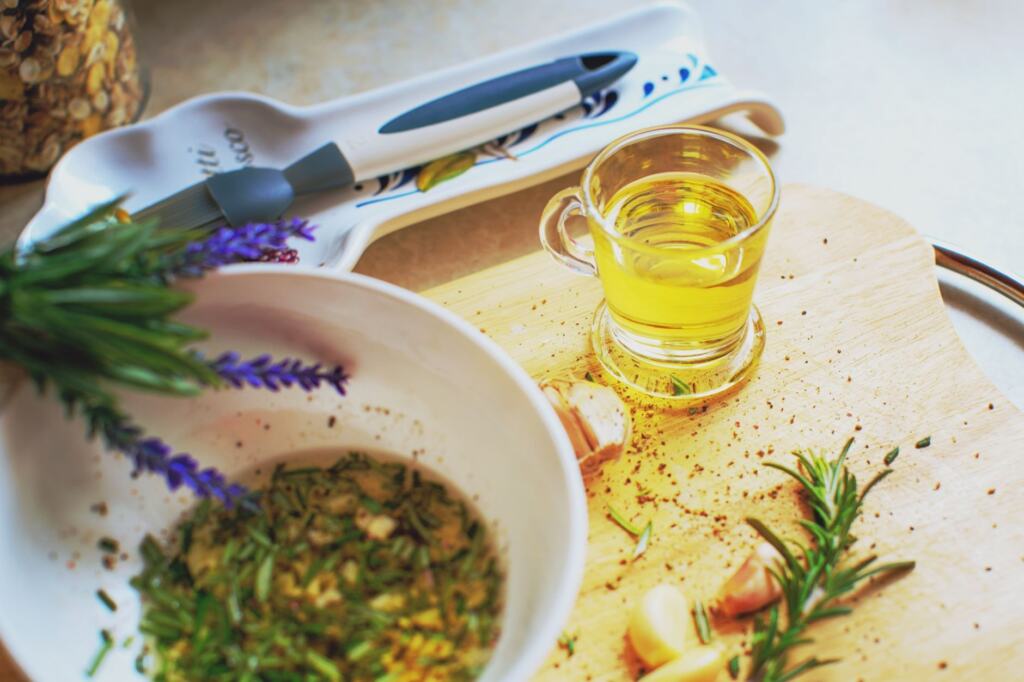
You can cook with flavour without onion and garlic by using garlic-infused oil, low FODMAP stock, fresh herbs, citrus and spices. Each of these is already used in published low FODMAP recipes, so none of it is a workaround invented for this page.
Garlic-infused oil as your flavour base
Garlic-infused oil is the most direct stand-in for garlic. One low FODMAP grocery guide includes quinoa sautéed with red pepper slices, pine nuts and garlic infused olive oil, which shows the intended use: the oil goes into the pan at the start, where you would normally soften garlic.
Treat the oil as an ingredient you buy or make with care, and check the label or the Monash app for anything shop-bought. It suits sautéed grains, roasted vegetables and meat that is browned in the pan. It does not replace the body that onion gives a soup or stew, which is where stock and herbs do the work.
Stock, herbs, citrus and spice
Stock is the easiest place to lose control of a recipe, so read the label before you pour. A low FODMAP quinoa tabbouleh from an Australian meal plan simply says do not add garlic and use low FODMAP vegetable stock. The same plan builds its chicken risotto on low FODMAP chicken or vegetable stock, which tells you that stock is treated as a decision, not a default.
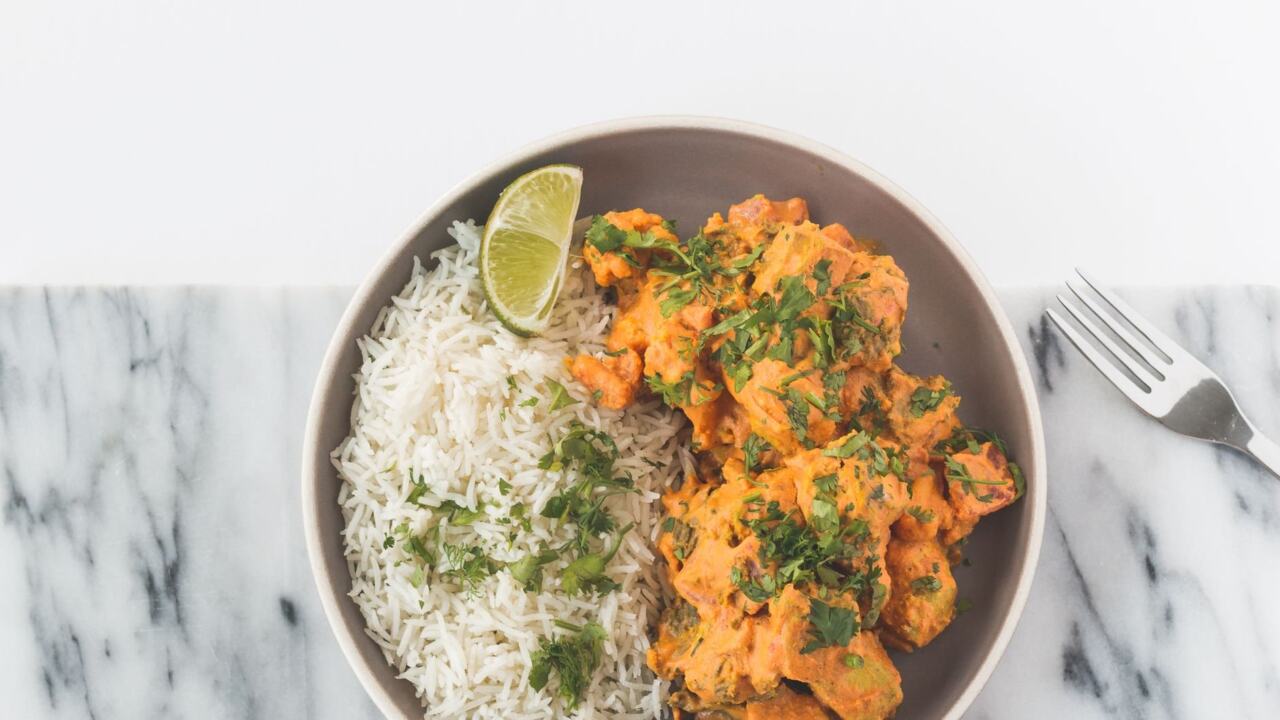
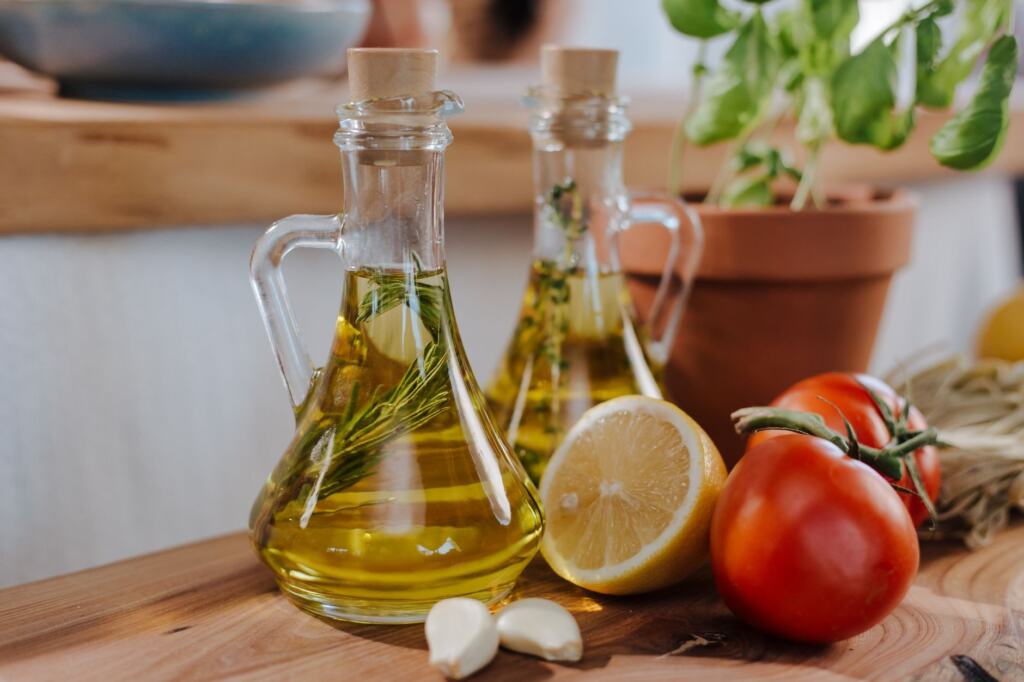
For depth without onion, lean on herbs, lemon, lime and spice. A listed spiced roast chicken with coconut coriander rice and charred courgettes gets its character from spice and fresh coriander rather than from an onion base. A creamy lemon chicken pasta shows the same logic with citrus carrying the sauce. A finishing squeeze of lime or lemon brightens a plain bowl of chicken and rice.
Dressings and fillings
Two other places hide onion and garlic: dressings and fillings. A low FODMAP dinner from a North Texas food allergy group pairs chicken breast and baked potatoes with a salad with homemade dressing without garlic or onion. Making the dressing yourself removes the guesswork that comes with bottled versions.
For stuffed peppers, the same source browns ground turkey, beef or Quorn with no onion or garlic. The lesson is to season a filling after it browns, using your herbs and spices, rather than starting from an onion base.
Lactose-free dairy and milk swaps
Lactose-free dairy is the simplest way to keep familiar recipes while you follow the diet. A low FODMAP grocery list from a food allergy group names lactose-free milk, lactose-free yogurt and kefir, and also lists cheeses such as cheddar, swiss, Colby, parmesan, goat, havarti, brie and feta as dairy or lactose-free alternatives.
That list makes the choice practical. Swap lactose-free milk directly into cooked and baked dishes where you would use ordinary milk. The same grocery guide’s French toast whisks 1-2 eggs with ¼ cup lactose free milk and 1 tsp vanilla extract, a good model of a small, measured breakfast you can scale up for a household.
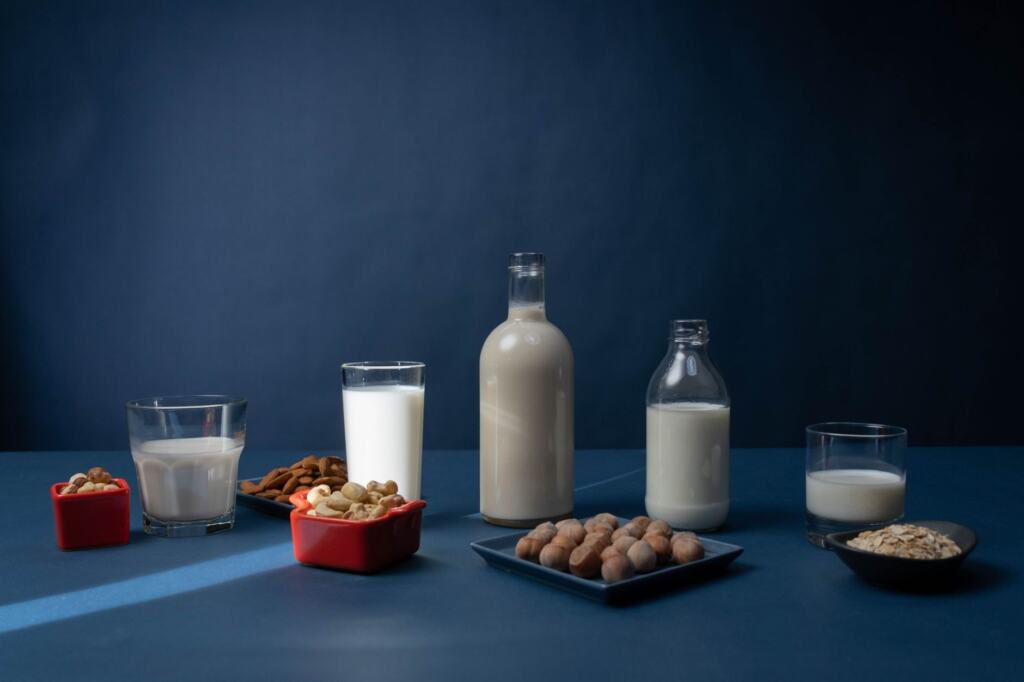
If you would rather skip dairy altogether, an Australian low FODMAP meal plan serves a glass of calcium-fortified rice or oat milk. Choose the fortified version if milk is a main calcium source for you, and ask your dietitian whether the drink fits your plan.
Serving sizes that decide a recipe
A low FODMAP recipe is only as safe as its portions, because many foods are acceptable in a small serving and not in a large one. The figures below come from published low FODMAP lists and recipes. Confirm any figure in the Monash University FODMAP app before relying on it, because serving sizes are updated there.
- Vegetables with caps: a North Texas food allergy group’s grocery list gives artichoke hearts 1/8 cup, broccoli 1/2 cup, celery 1/4 stalk and corn half a cob. Use these as ceilings per serving, not as targets.
- Brined and canned items: the same recipe site notes that artichoke hearts in brine have a low FODMAP serving size, so a packed jar is not a licence for a full bowl.
- Treats: a white chocolate recipe stays low FODMAP when one batch is divided into six servings, a reminder that the recipe yield and the serving size must match.
The decision rule that follows is simple. Find the vegetable with the tightest limit in a recipe, then divide the finished dish across enough plates that each serving stays under that limit. One-pan vegetable dishes work well for this because the layers are easy to portion by eye and by plate.
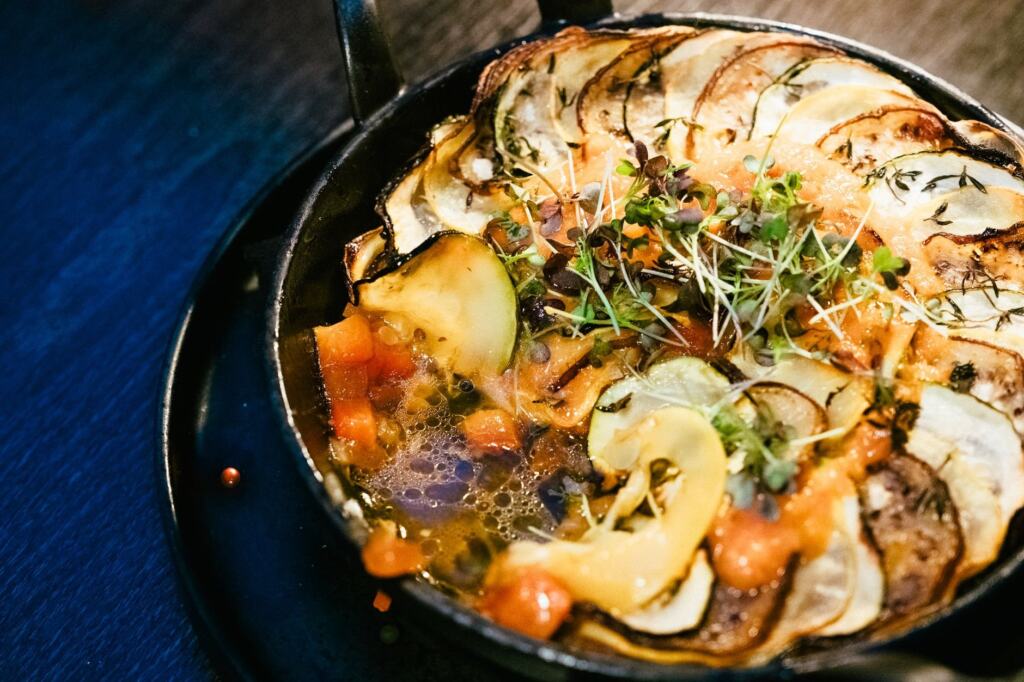
Before cooking a dish like this, check each vegetable against the food list and its serving size, and use garlic-infused oil in the pan instead of fresh garlic.
Easy low FODMAP dinners for IBS
Easy low FODMAP dinners for IBS share a pattern: one lean protein, one measured grain or potato, a vegetable, and a flavour base that avoids onion and garlic. The table compares dinners from two published sources so you can match a dish to the evening you have.
| Dinner | Base and portion | Flavour approach | Planning use |
|---|---|---|---|
| Chicken risotto | 1 cup cooked risotto rice with 100g chicken breast | Low FODMAP chicken or vegetable stock | Best when you want a comforting one-pot meal and have checked the stock label. |
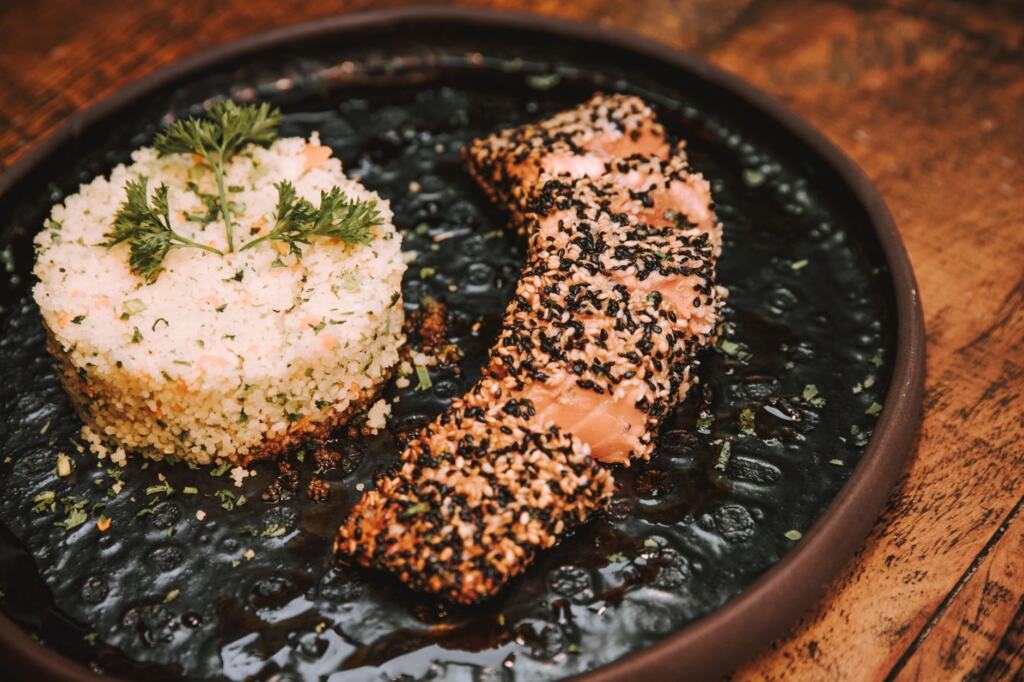
| Baked salmon with quinoa | 1 medium salmon fillet (120g) with 1 cup cooked quinoa | Baked plain | Suits a night with almost no prep, and works in every phase. |
| Stuffed peppers | Ground turkey, beef or Quorn | Browned with no onion or garlic | Good for batch cooking when you season after browning. |
| Chicken with baked potatoes and salad | Chicken breast, baked potatoes, salad | Homemade dressing without garlic or onion | Use when you want a plain plate with a home-made dressing. |
Portions and dishes in the table come from an Australian low FODMAP meal plan reviewed by dietitians and a low FODMAP meal guide from a North Texas food allergy group.
Choose the salmon and quinoa when you are tired, the risotto when you can stand at the stove, and the stuffed peppers when you want leftovers. The risotto is the dish most sensitive to a poor stock choice, so if you are unsure about a carton, cook the salmon instead and sort the label out later.
Recipe collections add more ideas that follow the same pattern. One lists a sticky sweet and sour glazed salmon with sesame jasmine rice, which is the model for a quick weeknight plate of fish, rice and a glossy sauce. For more rice-based meals, see the low fodmap rice recipes, and for hands-off cooking try the low fodmap slow cooker recipes.
Vegetarian cooks can follow the same structure with a different protein, as laid out in the low fodmap vegetarian recipes. Quinoa tabbouleh, covered earlier, is a vegetable-and-grain model that needs only the garlic omitted.
Breakfasts, snacks and drinks
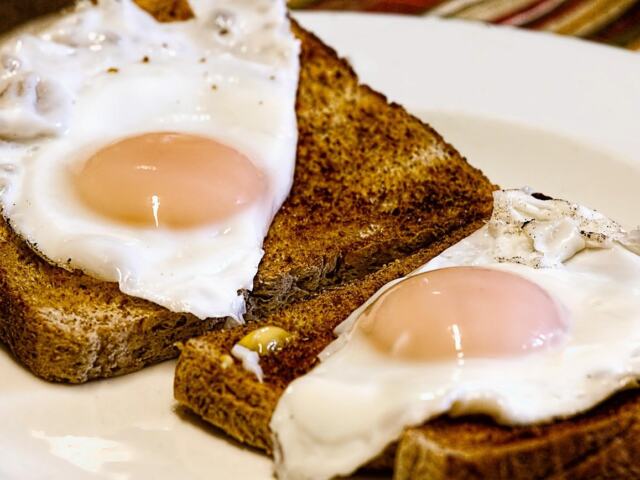
Breakfast, snacks and drinks are where small decisions repeat daily, so a few dependable formats save effort. Eggs are the simplest anchor: a recipe collection describes creamy scrambled eggs with baby spinach and feta as a quick low FODMAP breakfast with plenty of protein. For something sweeter, the pancake and French toast examples above show how to keep sweet toppings measured.
For snacks, a rice cracker plate keeps things simple. The Australian plan pairs rice crackers with 40g cheddar cheese, which is a measured portion you can pack. If you want something to carry, a recipe collection promotes granola bars as an easy snack you can take anywhere. Make a batch at the weekend and portion it so a snack is never a guess.
For more ideas, use the pages on low fodmap snacks and low fodmap drinks, and the low fodmap breakfast recipes for the full morning menu.
Planning the week and tracking symptoms
A weekly plan turns scattered recipes into a routine, and a symptom diary turns the routine into information. Write your meals on a printed sheet before you shop, then note how you felt after each one. A dietitian can use those notes in the reintroduction phase far more easily than memory.
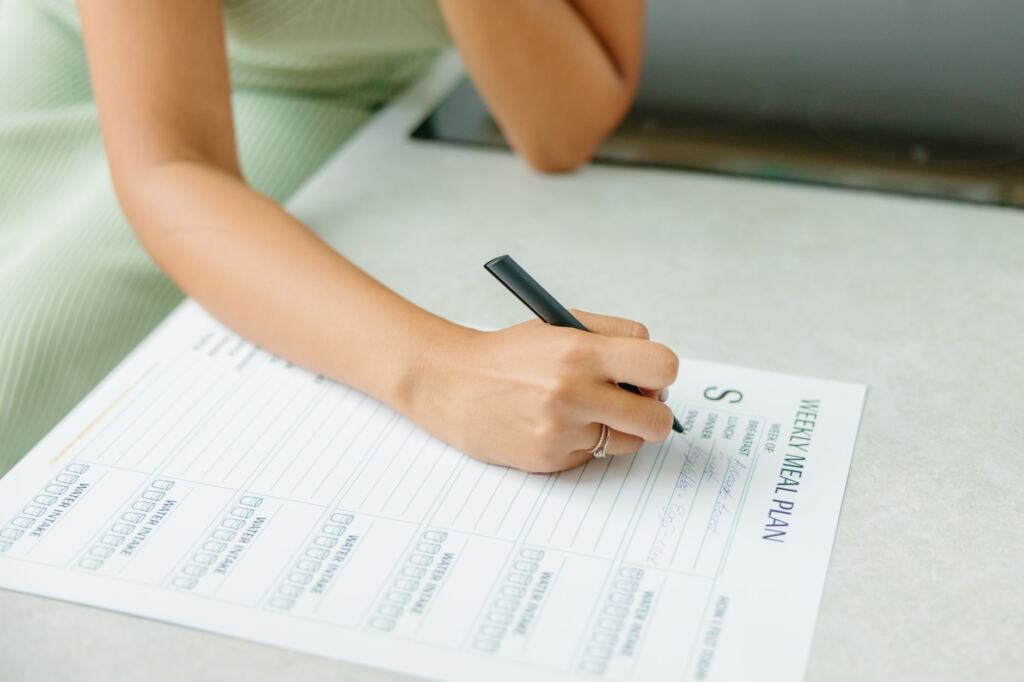
Build the week around a few repeatable meals rather than a new recipe every night. The low fodmap meal plan for ibs gives a ready structure, and low fodmap meal prep shows how to batch components. For midday meals, the low fodmap lunch ideas use leftovers well, while low fodmap soup recipes and low fodmap side dishes fill out the plate.
Keep the diary simple: what you ate, the portion, and how you felt afterwards. If a symptom appears, do not rewrite the whole plan. Mention it to your dietitian and hold the rest of the menu steady so the pattern shows.
Working with a registered dietitian
A registered dietitian turns a recipe list into a plan that fits your symptoms, your nutrition needs and your timeline. The dietitian role is not decorative here. The Australian meal plan cited above was expertly reviewed by Sharon Natoli and a team of Accredited Practising Dietitians at Food & Nutrition Australia, and a recipe site that labels dishes for the first phase has them checked by a FODMAP-trained dietitian.
Bring your food and symptom notes, the recipes you cook most, and any questions about label reading. If you rely on dairy for calcium, say so early so that lactose-free or fortified swaps are planned from the start. Professional guidance also protects you from staying on a restricted menu longer than necessary, which is the real risk of cooking from lists alone.
Frequently asked questions
| Question | Answer |
|---|---|
| Does the low FODMAP diet help IBS? | It has been described as an effective lifestyle treatment for many people, and a FODMAP approach can be a great way to reduce discomfort. Individual results vary, so track your own response. |
| Does a Monash-certified label replace professional advice? | No. A recipe can carry the Monash University Low FODMAP Certified trade mark, yet a strict low FODMAP diet should still be commenced under the supervision of a healthcare professional. |
| Can I eat a ripe banana? | A ripe banana has a small low FODMAP serving size, so keep the portion modest and check the current figure in the Monash University FODMAP app. |